
Academic
Laboratories
The Electrical Engineering programme at KIIT integrates laboratory practice with classroom learning through advanced facilities that develop real-time technical skills, analytical ability and practical confidence.
From principles to
practical performance.
Students work with electrical machines, power systems, drives, control systems, measurement platforms, electronic circuits and microprocessors. The laboratories support undergraduate and postgraduate learning, project development and experimental validation.
Explore the facilities
Select a laboratory to jump directly to its facilities, scope and people.
 01
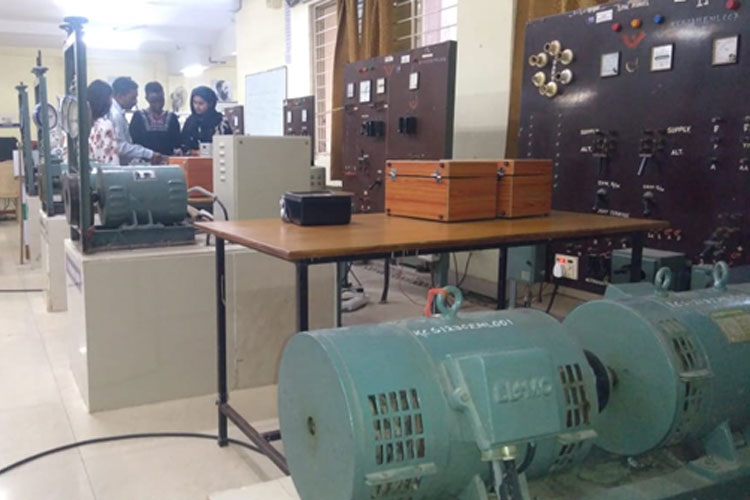
Electrical Machines Lab
 02
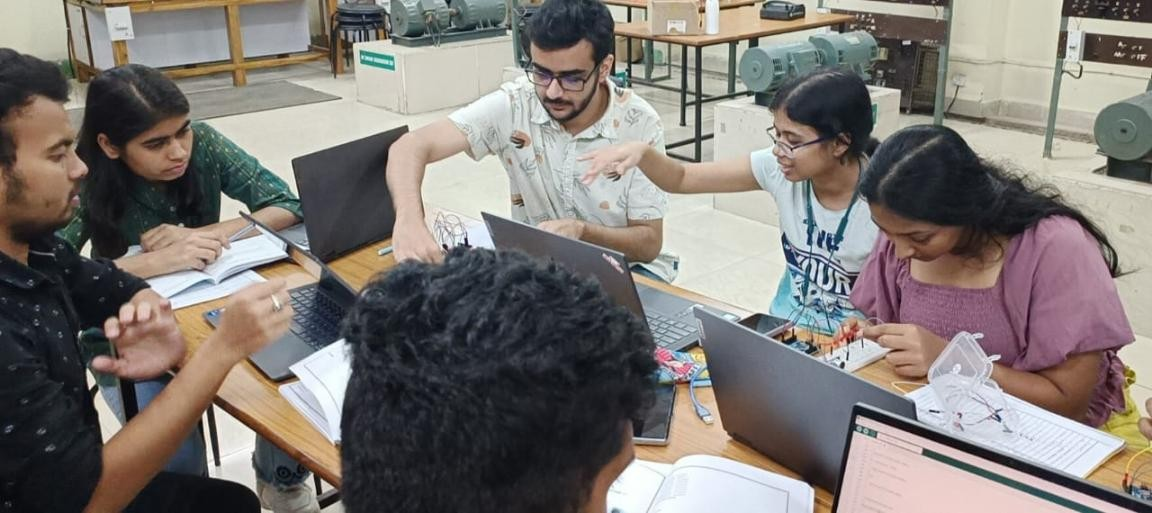
Electrical Measurement & Sensor Laboratory
 03
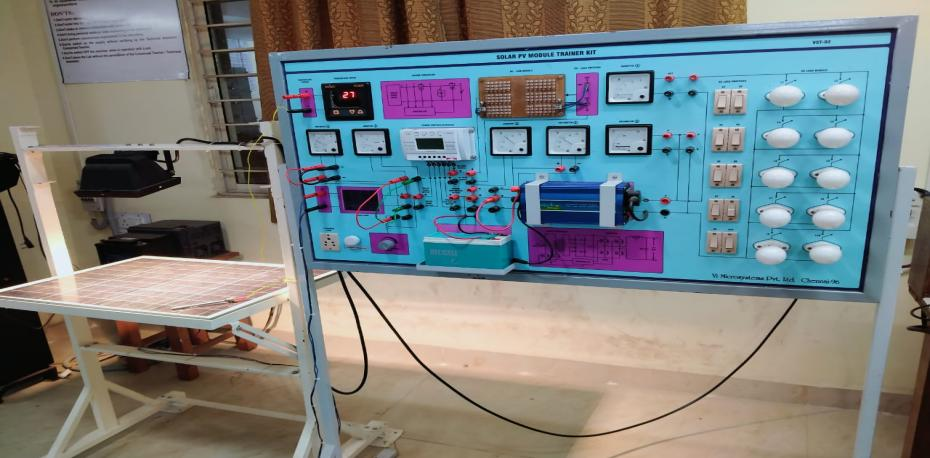
Power System Lab
 04
Electronics Circuit Lab
 05
Power Electronics Lab
 06
Microprocessor Laboratory
 07
Electric Drives Laboratory
 08
Control System Laboratory
 09
Basic Electrical Engineering Lab
Inside each laboratory
Expand a laboratory for its published overview, major equipment, learning scope and coordinators.
01Machines & energy conversionElectrical Machines Lab
Electrical Machines Lab
Overview and scope
The laboratory demonstrates the working principles and characteristics of DC and AC motors, generators and transformers. Experiments cover transformer conversion ratio, short-circuit, loaded and unloaded operation, polarity determination, externally excited DC generator characteristics and three-phase asynchronous machine operation.
Facilities and equipment
- Three-phase electric machine trainer: SAL.ALT + XPO-EMT/DC + 3PH.SAL.ALT
- Three-phase auto-transformer; single-phase and three-phase transformers
- Three-phase asynchronous electrical machines and integrated machine sets
02Measurement & sensingElectrical Measurement & Sensor Laboratory (EMS)
Electrical Measurement & Sensor Laboratory (EMS)
Overview and objectives
The EMS Laboratory enables undergraduate students to apply measuring instruments and sensors through real-time experiments. Work includes bridge methods for circuit constants, three-phase reactive-power measurement, current and potential transformers, RTD and LVDT transducers, Arduino-connected sensors and calibration using conventional and advanced digital methods.
Facilities and equipment
- DC and AC bridges, including Wheatstone and Anderson bridges
- Resistance Temperature Detector (RTD) and Linear Variable Differential Transformer (LVDT)
- Current and potential transformers
- Current, infrared, ultrasonic and DHT11 sensors
- Arduino hardware and software platform
Student projects
- Smart energy meter
- Gas-leak detection using the MQ-2 sensor
- Smart digital school bell with timetable display
- Soil-moisture monitoring using Arduino
03Protection, renewables & simulationPower System Lab
Power System Lab
Overview and scope
The laboratory supports hands-on study of transmission, distribution, operation, control and protection. Experiments cover transmission-line parameters, protective relays, IDMT characteristics, underground cable faults, Solar PV module I–V/P–V characteristics, differential protection, load flow, economic load dispatch, fault analysis and power-system modelling.
Facilities and equipment
- Numerical differential and over-current relays
- ABCD parameter transmission-line trainer and cable-fault locator
- Solar PV module trainer kit and VAR compensator
- Alternator protection and digital distance relay setups
- MATLAB (50 users), PSCAD (5), MiPower (20), ETAP (10), PowerWorld (10), LabVIEW (30) and Multisim (10)
04Analog & digital circuitsAnalog and Digital Electronics Circuit Lab
Analog and Digital Electronics Circuit Lab
Overview and scope
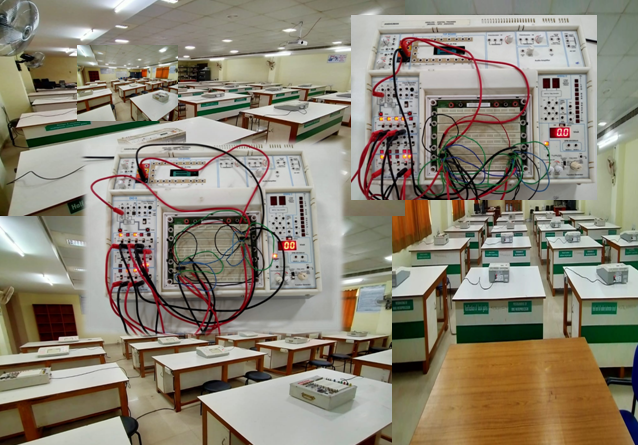
The laboratory bridges theory and practice in analog and digital electronics. Students design, construct and analyse oscillators, active filters, logic gates, Boolean functions, adders, decoders, flip-flops, counters and shift registers. Circuits are assembled on breadboards, measured, verified through truth tables and studied using timing diagrams.
Facilities and equipment
- 30 MHz, 500 MS/s digital storage oscilloscopes and analog oscilloscopes
- Breadboard trainer kits with power supplies
- Function generators, multimeters and general-purpose integrated circuits
- Zener diodes and components for network theorems, filters and oscillators
The facility is used for undergraduate and postgraduate projects and interdisciplinary circuit research.
05Converters & controlPower Electronics Lab
Power Electronics Lab
Overview and scope
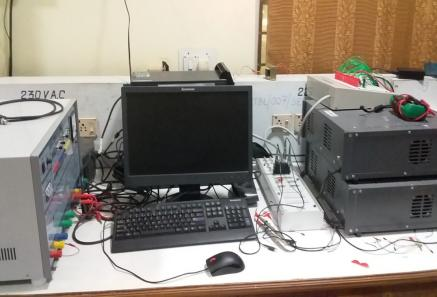
Undergraduate, postgraduate and doctoral students carry out confirmatory and exploratory experiments on power converters. Converter waveforms and performance are verified experimentally and through MATLAB/Simulink. The facility also supports modelling, design, control and hardware implementation of converter topologies for renewable-energy conversion, electric vehicles and electric drives.
Facilities and equipment
- DC–DC converters, DC–AC PWM inverters and single/three-phase AC voltage regulators
- Dual converters and cycloconverters
- dSPACE 1104 real-time controller and DSP processors with Code Composer Studio
- DC regulated power supplies, Hall-sensor current probes and isolated high-voltage probes
- Tektronix TPS 2014B DSO, VISSIM and MATLAB/Simulink
06Processors & interfacingMicroprocessor Laboratory
Microprocessor Laboratory
Overview and scope
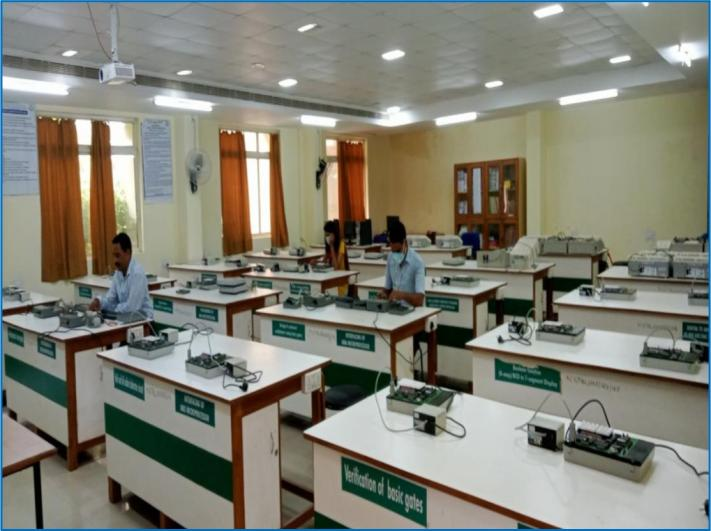
The laboratory provides assembly-language programming and hands-on practice using 8085, 8086 and 8051 trainer kits and simulation platforms. Students interface peripherals, work with ATmega microcontrollers, generate PWM pulses and apply processor logic to motor control and real-time projects.
Facilities and equipment
- 8085, 8086 and 8051 microprocessor/microcontroller trainer kits
- 8255 peripheral interfacing boards
- DC motor-control interfacing boards
- Traffic-light control interfacing boards
- ATmega microcontroller and PWM experimentation facilities
07Motor drives & automationElectric Drives Laboratory
Electric Drives Laboratory
Overview and scope
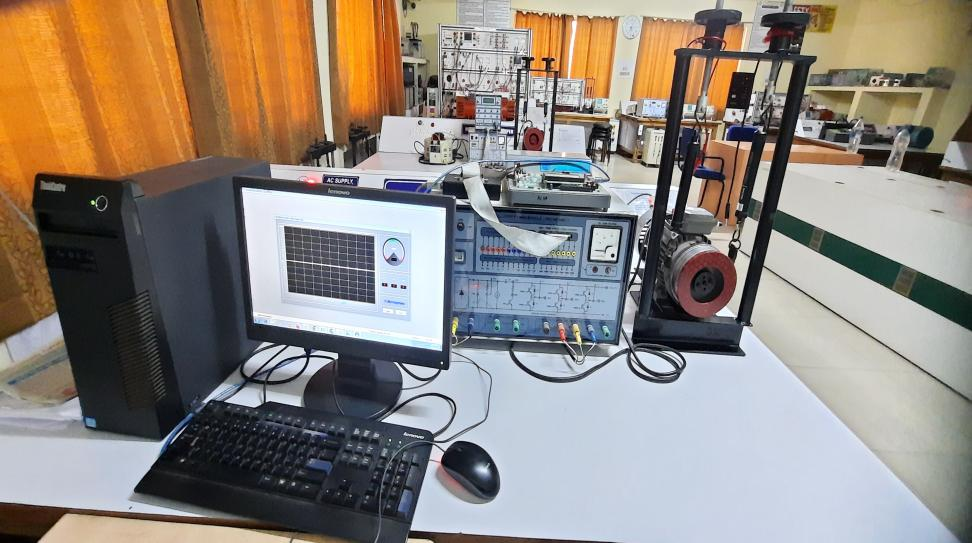
The laboratory develops understanding of motor drives, converters, braking and speed-control techniques. Students study machine dynamics under load, triggering, control, commutation and power circuits, motor protection and simulation-based validation. Applications include electric vehicles, traction, automation, propulsion, conveyors, elevators, servos and process industries.
Facilities and equipment
- Single-phase dual converter and three-phase multilevel inverter
- TMS320F2407-based DSP controller and intelligent power modules
- Three-phase IGBT inverter with induction motor
- AC servo trainer, static rotor-resistance control and four-quadrant DC chopper
- 50 MHz DSO, LCR meter, differential probes and MATLAB/Simulink
08Feedback & process controlControl System Laboratory
Control System Laboratory
Overview and scope
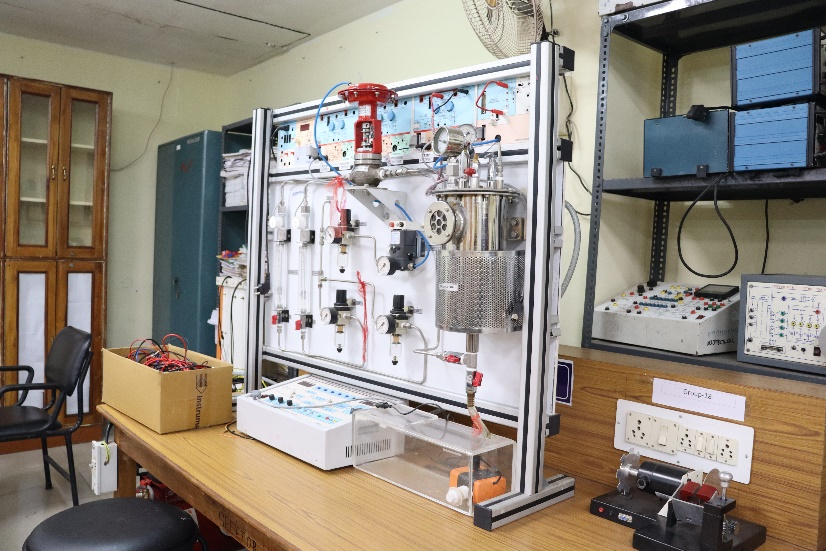
The course provides hands-on experience of feedback automatic control and computational tools used in controller design. Focus areas include motor, temperature, pressure and flow control; PID tuning; stability analysis; compensation design; and time/frequency response analysis of linear dynamic systems.
Facilities and equipment
- 50 MHz DSO, analog oscilloscope, variable power supply and function generator
- PID controller, process-control trainer and linear-system simulator
- Compensator-design, DC position-control and DC speed-control kits
- DC and AC servo systems, temperature controller and synchro
09Foundations & safetyBasic Electrical Engineering Lab
Basic Electrical Engineering Lab
Overview and scope
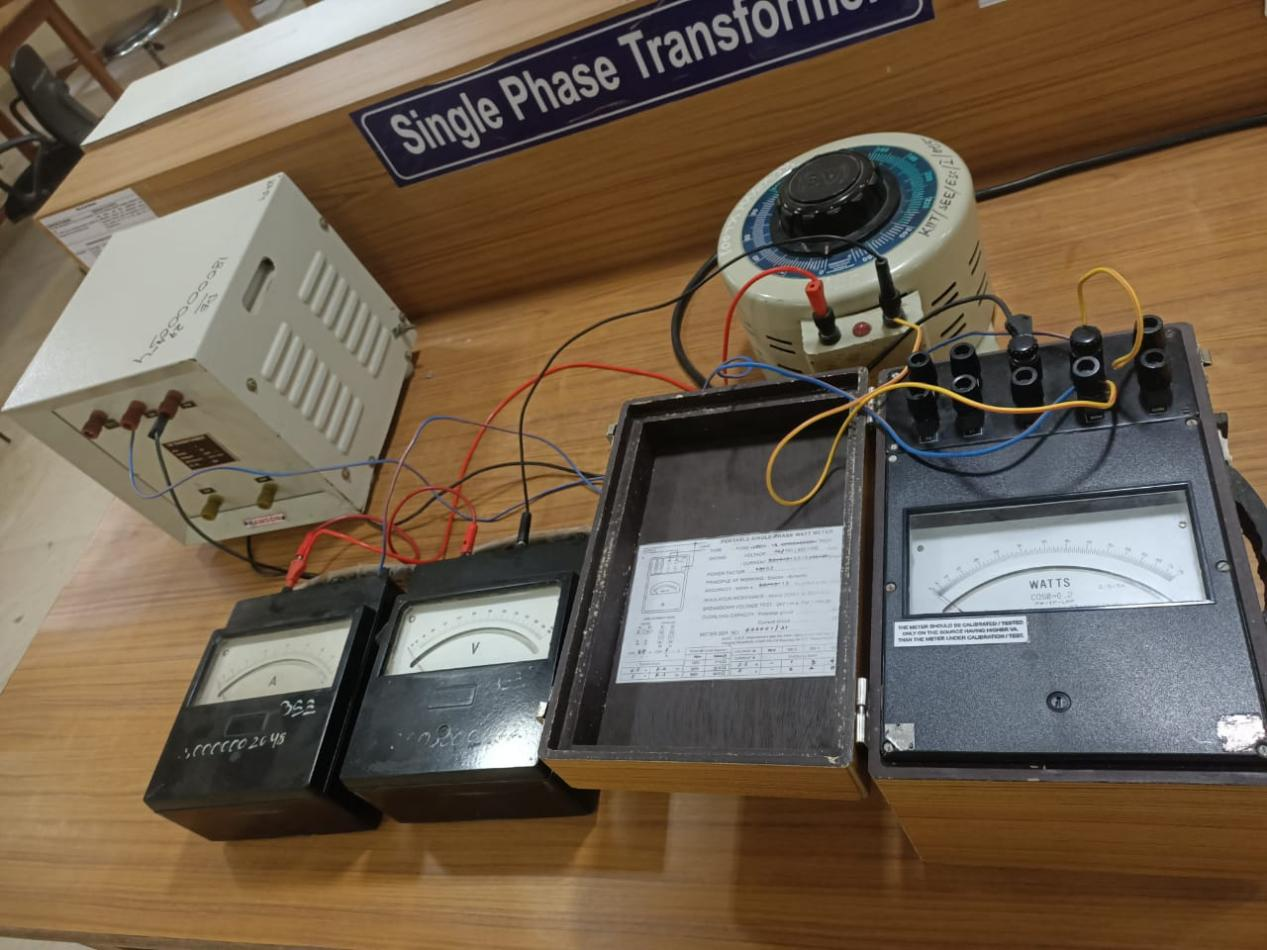
The Basic Electrical Engineering Lab develops a practical foundation in circuit analysis, electrical measurement, machines and laboratory safety. Students verify KCL and KVL, analyse three-phase circuits and R–L/R–L–C networks, study domestic energy and tariffs, examine transformer characteristics and identify DC and AC machine components.
Facilities and equipment
- AC/DC voltmeters and ammeters, LPF wattmeters and digital multimeters
- Single-phase transformers, auto-transformers, three-phase variacs and load boxes
- Megger/WACO, choke coils and energy meters
- DC shunt/compound machines and squirrel-cage/slip-ring induction motors
- Safety instructions, fire extinguishers and first-aid facilities
Safety is part of every experiment.
Students are introduced to electrical-fire response, equipment precautions, laboratory dos and don’ts, first-aid provisions and disciplined team working before practical activities.