
Simulation laboratory – Acronym
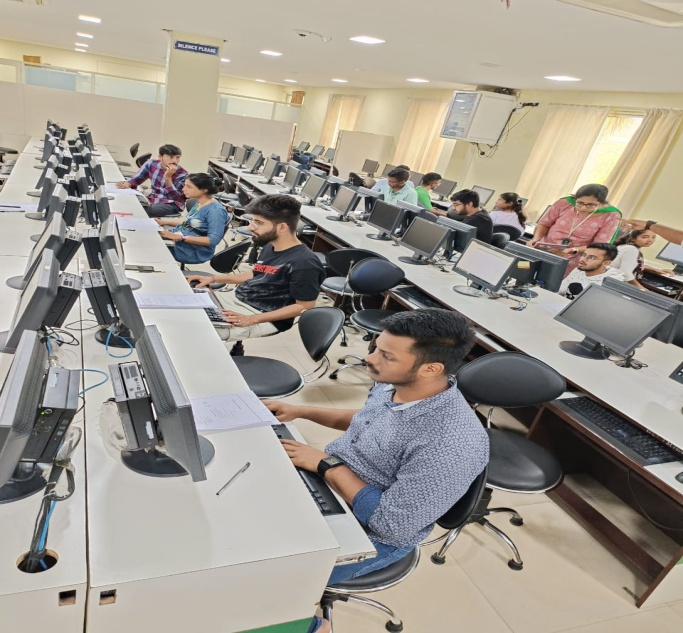
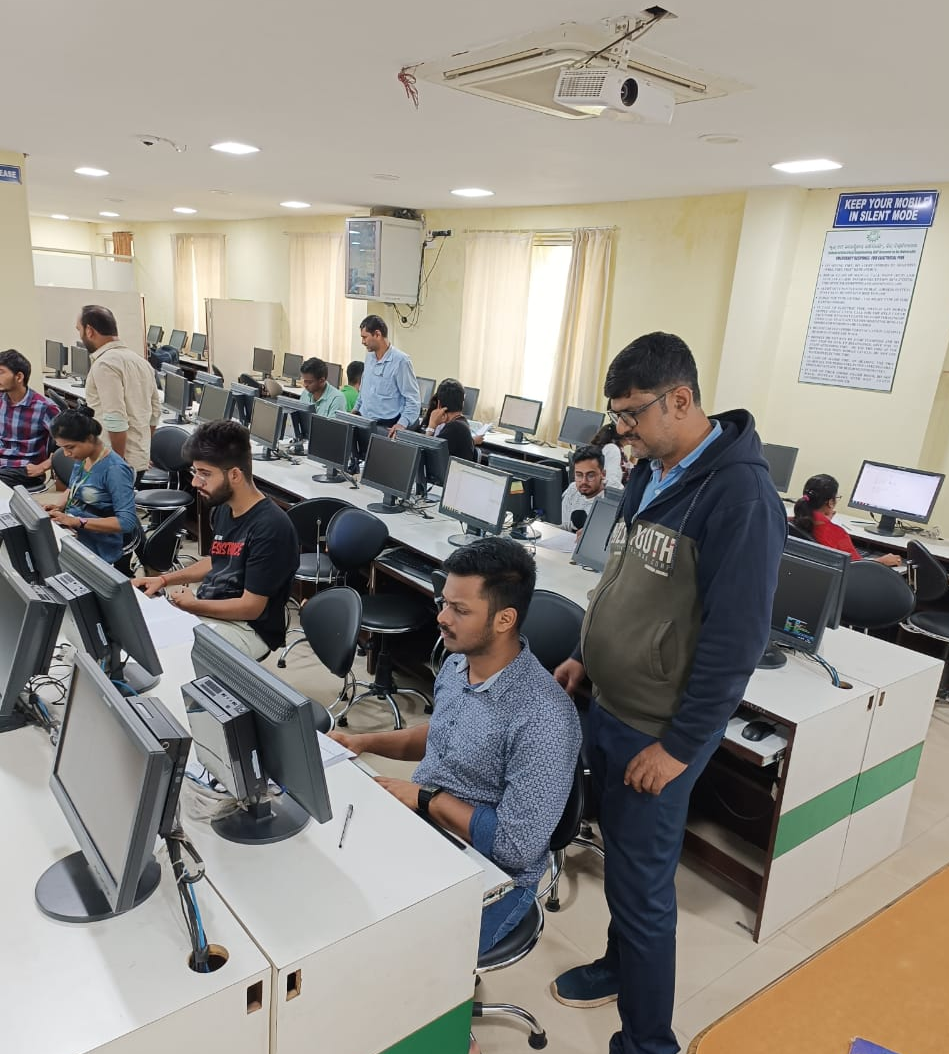
This lab’s objective is to provide students with the simulation tools they need to handle the industries and research activities associated with the electrical profession. Learn how to use various software programmes in the modern world, and students and researchers can put their expertise to use. One hundred desktop computers with top-of-the-line setups, including Windows 11 OS, 32 GB RAM, 512 GB SSD hard drive, and 12th generation Intel core i7 processors, are available in the simulation lab. Students will be able to learn how to analyze electrical systems utilizing computer programmes like MATLAB, LabView, etc.
Students can model and analyse various electrical systems using simulation software in this lab through a hands-on exercise.This lab’s goal is to help students understand and apply a variety of electrical engineering software tools for modelling and simulating diverse power systems and power electronic circuits.
After successful completion of the course, students will have access to software such as MATLAB, PSIM, and PSCAD, among others, to model and examine the response of diverse electrical circuits. In addition, they will be introduced to modelling and simulation through the use of graphical user interfaces such as SIMULINK, among others.
– Detailed description of major equipment and instruments.
In simulation laboratory contains 100 desktops with different electrical software’s packages likeMATLAB, MiPower, PowerWorld, ETAP, LabVIEW, Multisim, PSCAD, DIgSILENT Power Factory.
Powerworld, MiPower and ETAP are user-friendly and highly interactive power system analysis and visualization platform, which integrates many commonly performed power system tasks like Contingency Analysis, Time-Step Simulation, OPF, Fault Analysis, Sensitivity Analysis, steady state analysis to stability and security assessment. With PSCAD student can build, model and simulate, the transients of power system.
LabVIEW (Laboratory Virtual Instrument Engineering Workbench) is a graphical programming environment developed by National Instruments. It is widely used for data acquisition, instrument control, and industrial automation, providing tools for designing and deploying complex test and measurement systems. MATLAB® is a programming platform designed specifically for engineers and scientists to analyze and design systems and products that transform our world
– Unique or specialised facilities available.
This lab facilitates students in analyzing various networks using different techniques in analyzing circuit responses. Through this exposure, the students will be able to develop various simulation skills using different software like MATLAB, PowerWorld, ETAP, LabVIEW etc in different simulation environment.
| LabView Software 12.0 (30Users) | Helps to develop the control circuit for online monitoring and control through hardware interfacing. |
| ETAP Software 7.1.0(10 Users), 01 Dongle | Analysis, simulation, monitoring, control, optimization, and automation of electrical power systems. |
| PSCAD Software (5Users), 01 Dongle | It helps to design the power generation and ditribution system and analysis of load flow, falult etc. |
| MATLAB Software 2012a (50Users) | MATLAB allows matrix manipulations, plotting of functions and data, implementation of algorithms, creation of user interfaces, and interfacing with programs |
| MULTISIM Software 12.0 (10 User) | Multisim is one of the few circuit design programs to employ the original Berkeley SPICE based software simulation. |
| PowerWorld Software 16.0 (10 User) | Interactive power system simulation, analysis and visualization |
| MI-Power Software-9.1 | Operations like Steady State Analysis, Stability Assessment, Transient Studies, Security Monitoring, Assessment & Control, Protection Coordination, Planning Studies can be performed |
– Current and past research projects.
This laboratory is being accessed for UG, PG and PhD students for their research projects.
– Collaborations with industry or other institutions. This laboratory is developed in collaboration with PRDC Bangalore.
Collaborations and Partnerships: Nil
– Details of ongoing and potential collaborations.
– Information on industry partnerships and consultancy services offered.
– Any notable innovations or contributions.
Lab Photos